
Good Legs and Sniffing the Cork: Wine Myths a Somm Wants Gone Pt. 4
Tonight's Episode
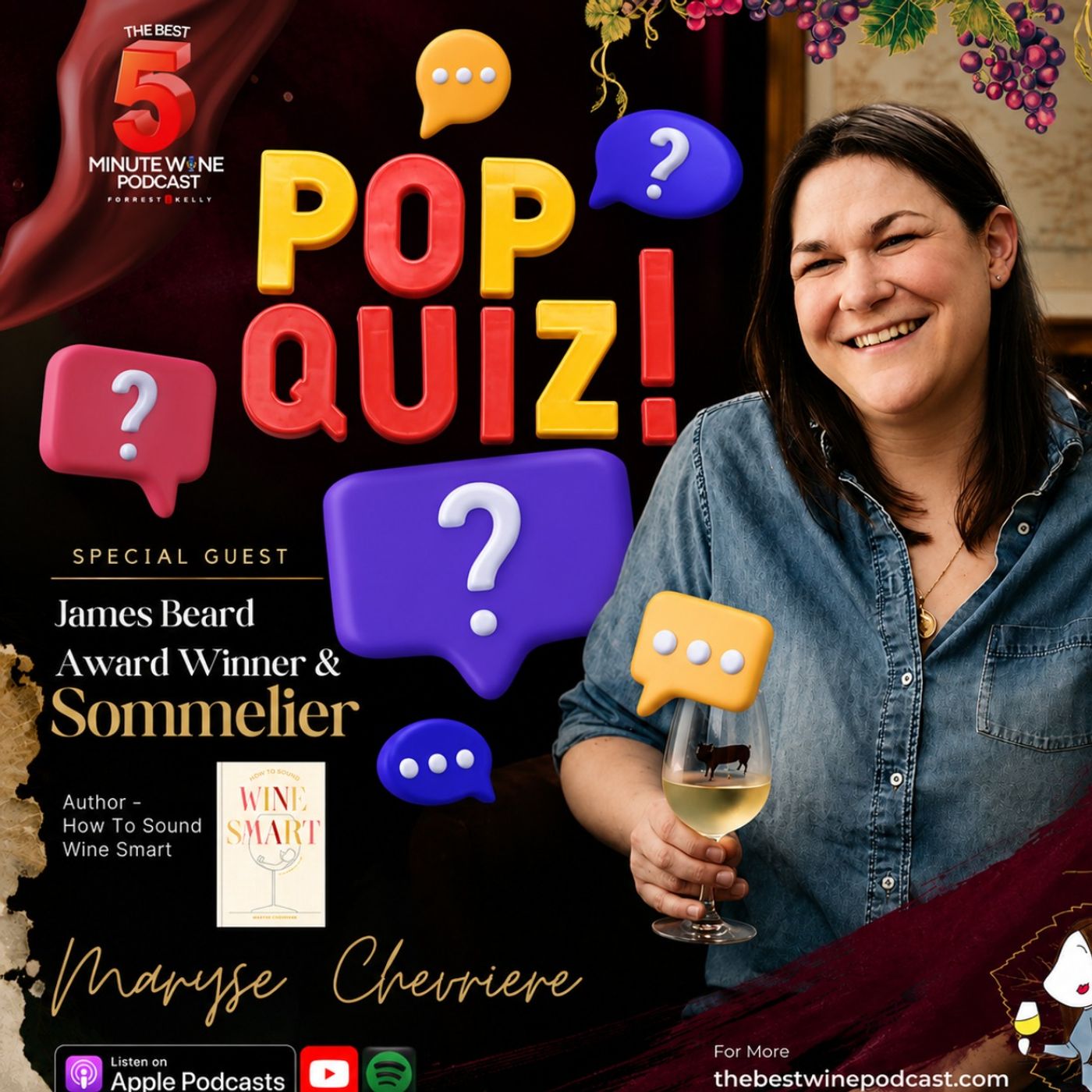
Maryse Chevriere a five-question, multiple-choice wine quiz, and her answers double as a myth-busting crash course.
Why do sommeliers have you taste before pouring the full glass? To check whether the wine is corked or flawed — and, honestly, to catch whether you simply don't like it. Maryse would rather figure that out early, pour the bottle by the glass, and steer you toward something you'll love than watch you pay for a bottle you'll never finish. And that returned bottle needn't go to waste: if it isn't faulty, let the staff taste it so they can sell it by the glass as a special. Everybody wins.
"Good legs"? It's about sugar and alcohol content — not quality, not price, and definitely not a Boston Marathon qualifying time. Maryse calls it a phrase you don't really need anymore, though it opens a lovely tangent about her dad, an old-school wine lover whose family hailed from Bordeaux and who was sure those were simply the best wines there were. As she learned the subject herself, she realized his confidence came from a narrow lens — but he enjoyed wine and had a good time, and sometimes that's its own kind of bliss.
Why swirl? To release the aromas — the contact with air wakes the wine up. She half-loves Forrest's alternate theory that you're summoning the flavor gods. On tasting technique, she suggests drawing in a little air like sipping through a mini cocktail straw (no gargling required) and letting the wine touch all points of your palate, since you taste different things in different places — without getting too fancy about it.
And sniffing the cork? Mostly theater. A cork smells like cork. If you want to know whether a wine is tainted, smell the wine in the glass, not the stopper — a lesson she picked up early in her training.
For the Wine-Curious listener, it's five minutes of permission to stop being intimidated by the rituals — and to understand what's worth doing and what's just for show.
@thebestwinepod
Discover More from The Best 5 Minute Podcast Network:
Hosted by Simplecast, an AdsWizz company. See pcm.adswizz.com for information about our collection and use of personal data for advertising.


 Apple Podcasts
 Spotify
 YouTube