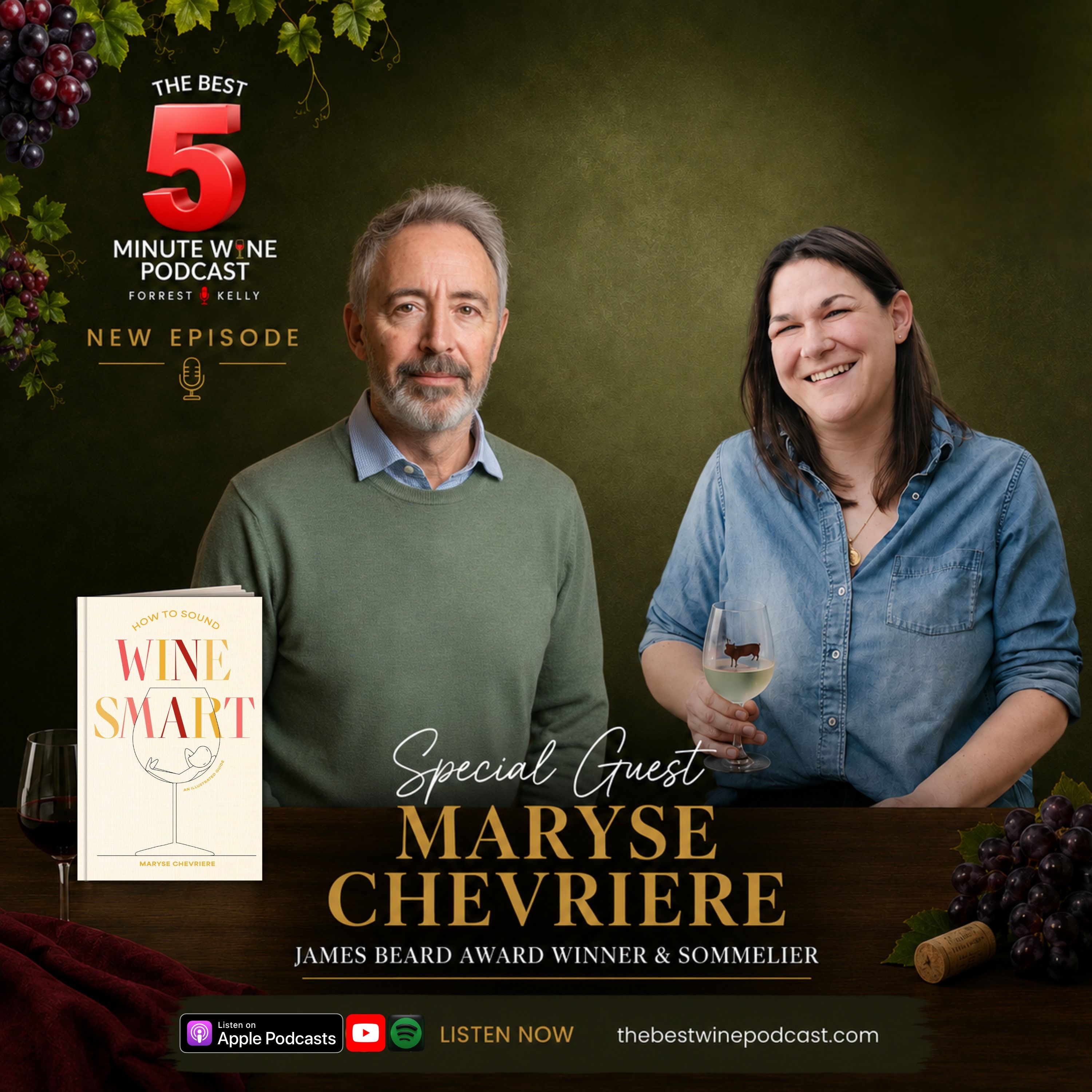
Golden Retriever Energy: Wine Book Throws Out the Snob Rules Pt. 3
Tonight's Episode
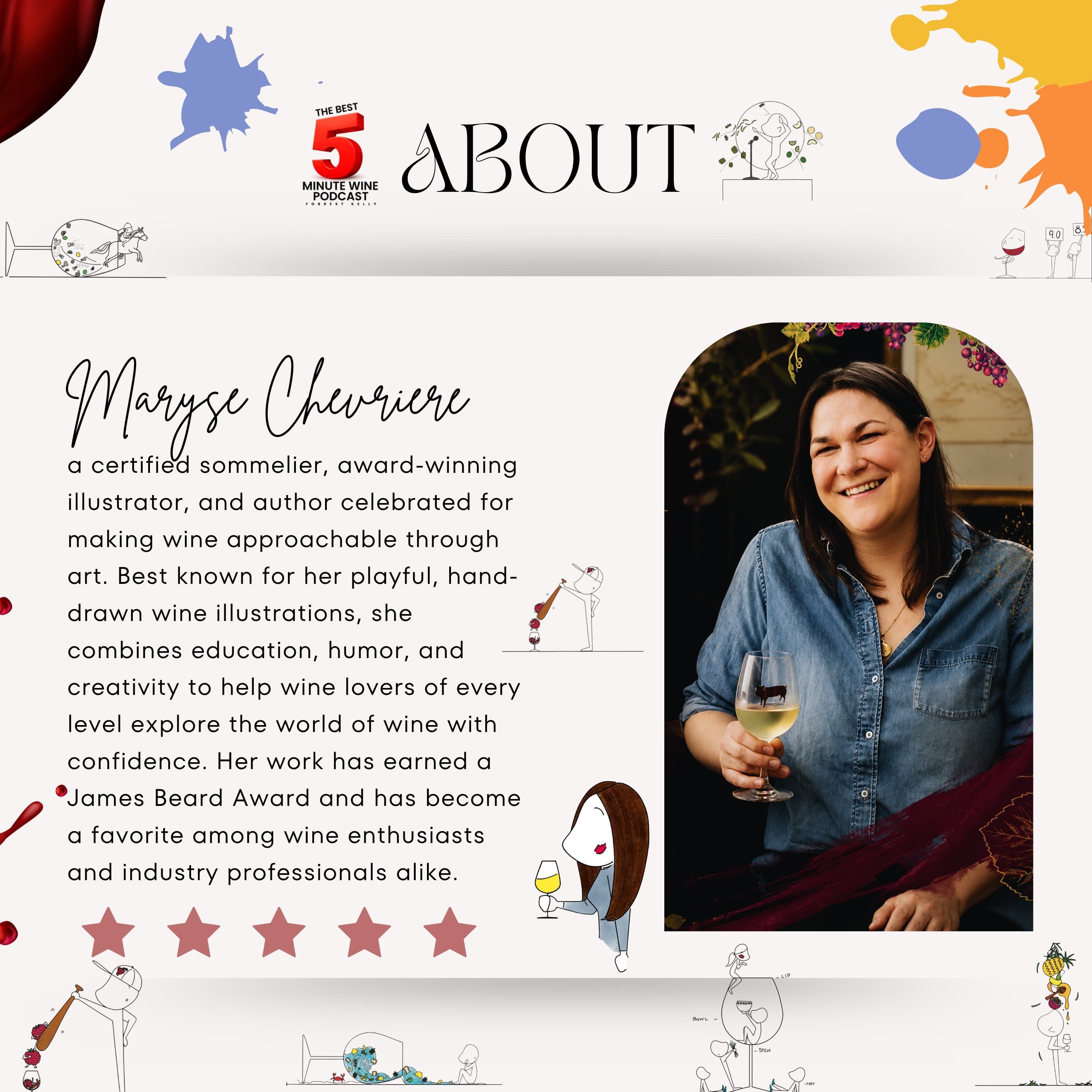
The best way to learn wine, Maryse Chevriere argues, isn't to read about it — it's to pour two glasses and taste the difference. In this episode she walks Forrest through the drinking games tucked into How to Sound Wine Smart, designed to make abstract concepts click through direct comparison. Think a wine you assumed was sweet suddenly revealing itself as dry when set beside an actually sweet one, a shy grape next to an aromatic Gewürztraminer, or one bottle tasted at first sip, again at thirty minutes, and again at two hours to feel what time and air really do. There are no winners, no losers, and no test — just an experience built to make the lesson stick and get people genuinely excited to drink wine.
Maryse also pulls back the curtain on making the book. Illustrating it took five or six months — most of them while she was pregnant — and proved trickier than expected. On Instagram, funny tasting notes hand her ready-made visual ideas; for the book she deliberately chose the generic, professional terms people actually use, which meant figuring out how to paint something as abstract as "rustic," "silky," or "leathery." Writing was its own slow burn, since she's a self-described fiddler who can't move on until a line sounds exactly right.
Asked for her home run, she points to the "character" chapter. Instead of the technical checklist of fruits, non-fruits, and "medium-plus" this-and-that she was trained in, she gives readers something more relatable: a wine that's friendly, that's giving golden retriever energy. It's a warmer, more human way in.
Forrest names the throughline — she's not dumbing wine down, she's making something genuinely complex feel approachable. This isn't soda off an assembly line; it's the product of an enormous amount of craft, and she wants more people to feel welcome to it. Maryse agrees, wondering aloud why wine intimidates people in a way that describing a restaurant dish or a piece of art simply doesn't. The stigma, she says, is what wine has had to work hardest to overcome — and helping people get past it is the whole point.
@thebestwinepod
Discover More from The Best 5 Minute Podcast Network:
Hosted by Simplecast, an AdsWizz company. See pcm.adswizz.com for information about our collection and use of personal data for advertising.
 Apple Podcasts
 Spotify
 YouTube