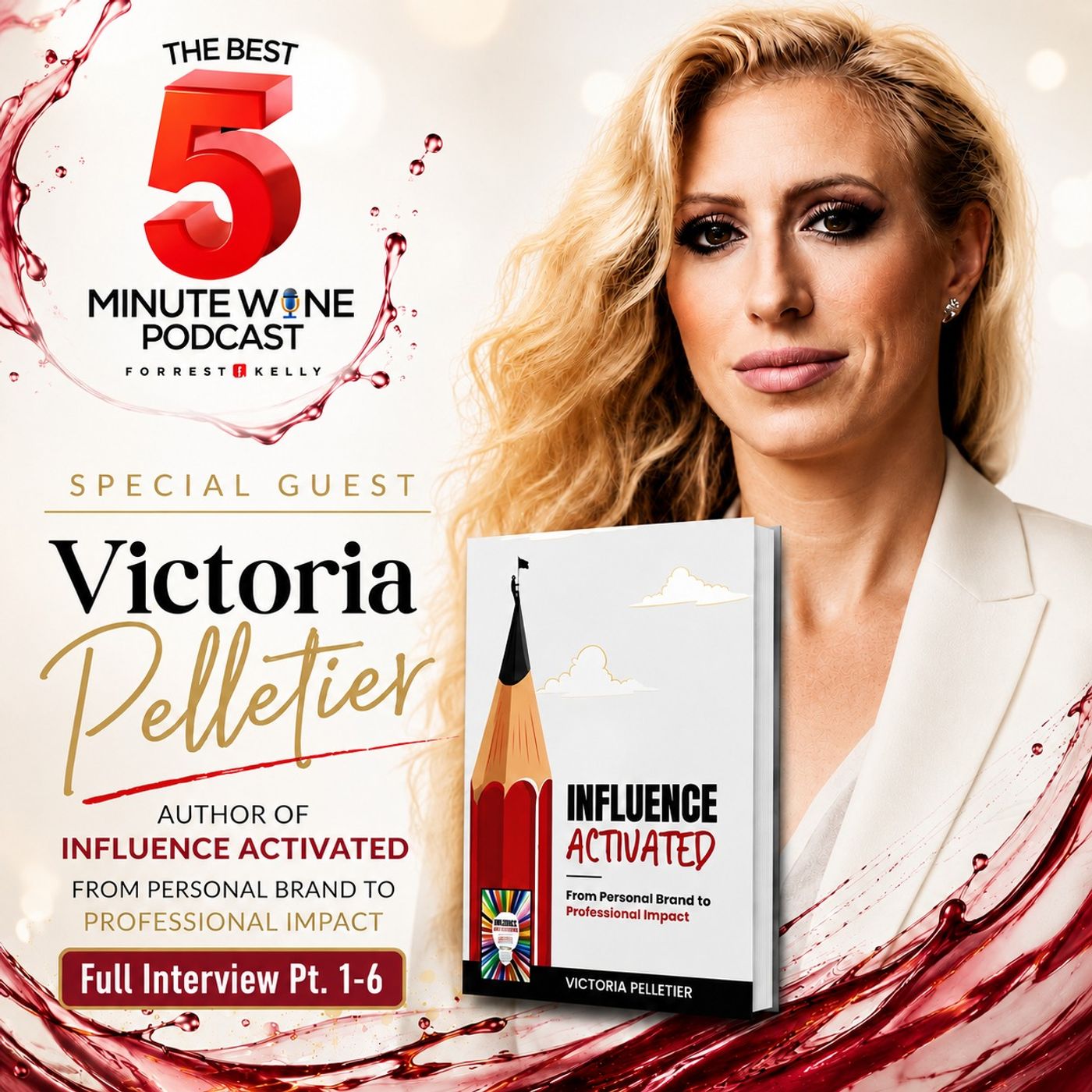
An Executive by 24 — and She Drinks Her Wine W/O Apology Pt. 1-6
Tonight's Episode
Victoria opens with her own name, because hosts tend to tiptoe around it — P-E-L-L-E-T-I-E-R — and from there the story moves fast. She was an only child, gifted, and a bit of a loner who genuinely liked the solitude. Her bike was the vehicle for all of it: new parks, new kids, streetlights as the only curfew, and the habit that never left her — watching people and inventing stories about them. She got her first real job at eleven at a hair salon, running the front desk, the cash, the appointments, the sweeping, the towels. She was already five foot eight and passed easily for older. Babysitting on the side paid two dollars an hour.
At fourteen she became assistant manager at a shoe store, coaching people decades older than she was. She describes herself as turtle shell outside, marshmallow inside — somewhere between don't mess with me and do you want a hug — but she's clear that the shell came later, built out of a belief that leadership meant all business, all the time, mask on, emotions off. She unlearned that. Vulnerability and empathy, she says, are what actually build trust.
@thebestwinepod
Discover More from The Best 5 Minute Podcast Network:
Hosted by Simplecast, an AdsWizz company. See pcm.adswizz.com for information about our collection and use of personal data for advertising.
Transcribed automatically by PodView
Welcome, welcome to the best five minute wine podcast with Forrest Kelly.
Hi there, I am Victoria Peltier, a corporate executive, a professional publisher and an author of five books with my newest one coming out this September. Look forward to speaking. Hosts tend to shy away from pronouncing your last name. So let's just... I know, I know. Yeah. It gets butchered. Let's just tackle that right away. So your last name is spelled P-E-L-L-E-T-I-E-R, and it's pronounced so suavely. L-T-A. So let's get into your background a little bit, reading that you were a voracious reader, which I was as well, and you rode bikes as a child, which I did.
It was over $100. I got a Schwinn bike and it just set me on adventures because the book and reading books, I always wanted adventure. And so can you tell us what it was like for a 10 year old or however old you were riding your bike and going around your neighborhood? Oh, yeah. I wish kids were doing more of this today. You know, for me, I was an only child and somewhat loner. I was like a gifted kid, which at a time worked for it. I think it's embraced now. And so I found myself alone a lot and I enjoyed the solitude, but it was also the opportunity to explore new parks where I might meet some new kids as well.
So I went all around the neighborhood and beyond. And of course, following the rules that when the streetlights went down, that's when it was time to get back home, given that no cell phones back then. Riding my bike isn't where I made my money. I did start working at 11, however. I worked in a hair salon. So the riding the bike was exploration, my ability of sightseeing. And I've always been an avid people watcher. So, you know, doing that even from a bike at that point, I took those lessons and what I observed and my made up stories of the people I saw to bring them into the real world.
So hair salon, how did you get that job? It was the hair salon that my, so first of all, I'm five foot eight, which isn't crazy tall for a woman, but I did actually hit this height by the time I was 10 or 11. I looked so much older and mature and I was. And so they were looking for someone to help with like booking appointments, doing cash, everything except for hair. I did everything, you know, managing the front desk, the cash, the appointment, sweeping the floors, doing the laundry of all the towels.
That was my first job at 11. Running the place. Can you imagine an 11 year old doing all of that stuff? Yeah, I think child labor laws would probably not allow that today. But I did it back then. I remember I was also babysitting. That paid me $2 an hour. You know, what a jump on everybody else waiting until they're 16 to get a job. You have some chops. Yes. First leadership role came at 14, mind you. Your personality that you said you've described yourself as turtle shell outside, marshmallow inside.
Somewhere between don't mess with me and do you want a hug? So you're developing that, this leadership role at 14. What happened? Yeah, you know, I would say that the turtle is a description that came later in life. I think I've always been like an empathetic leader and kind, not, you know, not someone that people wouldn't want to work with or for. But I thought I had to be all business all the time, you know, so like super focused when I maybe not when I worked in the shoe store at 14, I became the assistant manager to people who are like decades older than me.
And so that was more of a fine line in balance in terms of how to coach and get the direction versus my first executive role. I progressed through university. I worked in, you know, in a bank and progressed up into leadership roles. And then it became an executive at 24. So that all business all the time, wear a mask, you know, don't show the emotions. I learned later in life. So that's where the turtle, I'm extremely resilient, tough on the outside, gone through significant trauma, challenge and adversity.
But I really do allow vulnerability and empathy to come out. That is what builds trust and connection with people. Who directed you to for college when you obviously somebody in your circle, your parents or somebody realized that, you know, this gal is, she's going places, so she better get a great education. I was adopted when I was four and my adoptive parents, loving, I'd come out of a pretty horrible first few years of my life, yet lower socioeconomic. My mom was a secretary. My dad was a school janitor.
As I mentioned earlier, I was gifted in school. So I did very, very well academically. And I remember my mom said to me, I think I was 10 or 11. She's like, Tori, you need to do better than us. And she meant education, vocation, but she did not need to tell me that because I was determined to be better than either my biology or the circumstance in which I was raised. So I knew I was destined to go to post-secondary education. That's so off-putting to people sometimes that it's better than them. And they take it in a snooty way, but it's like not that, that's not the point.
No. Yeah, no, I mean, better than where I came from. So I'm born to a drug addicted teenage mother who beat the crap out of me. So I knew I wanted a better life for myself than she chose for herself. So it's not about being better than people. I knew that I wanted an education and I knew that I wanted a vocation that would allow me to have more flexibility than my parents had. There were no extremely limited vacations. There was no money for me to go on my high school graduation trip. So that's what I mean when I say better than.
I wanted to be better than the circumstance as I was born and raised in. Not better than any individual person. Yeah, flexibility. That's a key word too. I'm going to grasp onto that. Did you go to school? I'm from Canada originally, which your listeners might hear generally only by a couple of words I say out and about. I grew up in Western Canada and Calgary. I somehow let my mom convince me to go to University of Calgary. I'd been accepted to other schools, but I graduated at 16. And so she said, you know, at that age, even though I had a scholarship, she said, stay at home.
You know, then your room and board is paid for. So I did stay, went to University of Calgary. Funny enough, I moved out on my own in my first semester. So I really could have and should have gone somewhere else. But that's where I went to school. And then I got relocated right out of university to Toronto. So Toronto is where I spent a lot of my adult years before I was relocated to the U.S. So then you graduate at 16. You're already, you're still accelerating way past everybody else. So before you even get out of school, I'm guessing that you might have had some jobs lined up.
Oh, I did. I worked throughout all of my university career. So I had never not had one, two or even three jobs. So as I said, I had moved out on my own. I was living with a boyfriend at the time, but I bought my first house at 19. So, you know, I continued working in banking. I also worked at a doctor office part time And I was an actor on call doing some stage work but some commercials and things like that so I did all of those things while going to school full Well how many what are you averaging for sleep going through that whole time?
Back then I think I only needed four or five hours you know today is significantly more although it's much more interrupted than it was at 20. It is amazing when people think that they're oh I'm stressed or I'm busy it's like okay time out here. Let me show you what busy looks like. Yeah. My, my children, when I talk to them about, you know, the, you know, cause they often like to come to mom for money when they need it. And I'm like, well, why don't you pick up an extra job? And my older son was like, well, but then you have no social life.
I'm like, right, dude. I did not like choices. We make choices. Well, your social life is you're at your job talking with coworkers about how you're going to get more money and work more hours. And did you give him an eye roll or did you put your hand on his shoulder and go, let me talk to you for a second? A bit of both. He didn't like the advice he got for me when he came to me for it. But I've tried to teach them the value of hard work in a dollar hasn't fully translated, but a little bit more so than others.
And when they went to post to college, I told them they had to maintain a certain grade point average, or they had to pay me back for that semester. I will tell you, he only did it twice in his college education and complained, however, because then his friends' parents made them do that. I'm like, well, sucks for them, but I'm teaching you a lesson. C-suite. I had to actually look up that term, even though I've heard all of the acronym. So explain to our listeners, because we're going to dive into the C-suite thing here.
What is that? Yeah. So C-suite, C standing for chief. So I've been a chief executive officer, CEO. I've been a chief operating officer, COO. And many of the functions like HR and technology have reported into me in some of those roles as well. So you got your first one at 24 and that's kind of been your stamp on your resume. What leads us up to that? And then whatever you want So will you expand on that? Go ahead. Yeah. So I said I worked at a bank when I was in university. I got promoted through the ranks up until like director level.
So senior level. I got recruited, however, at age 24. And I was also a brand new mother. My first son was only three months old. It was a large, medium size, I should say, like private outsourcing company. So the early days of outsourced call centers, telemarketing, customer service and technical support. and it was a stretch role for me, but they had large banking clients and I had worked for two of Canada's largest banks and it was contact center and I'd been running call center operations for those banks.
So there were a lot of ticks in the box for them to hire me. I also always showed up incredibly confidently, which I believe for many equates to competence, rightfully or wrongfully so. And so I took on that role as COO and general manager. Everything but finance reported to me. It was a massive, massive learning opportunity. But running a P&L, one that's really lean when you're in the outsourcing environment, like you have to be on your A game or you lose money. So it taught me a lot about how to lead in business and be successful, leading extremely large teams.
So I stayed in the world of outsourcing. A number of the companies I worked for were sold. So I've actually now done just over, I think, 40 merger acquisition or divestiture transactions in my career and more corporate restructure than I can count. But since then, these last 26 years, and yes, I'm giving my age away, I just turned 50. I'm to your audience. So the last 26 years have been all in B2B professional services, whether it's outsourcing, consulting, technology, or the combination of all three of those.
Was there any specific times when you thought, you know, you could see the difference and go, okay, they're not responding to me because I'm a woman? Oh, many, many times. And some of it's been cultural. It's changed a lot, but I remember my first trip to India 20 something years ago. I was the most senior person there. We were building an office and the, you know, the site manager there as I went to check in on it wouldn't talk or engage with me, but my male employee. So I've gone from that kind of thing to, you know, having people question me or call.
There's, you know, traits that in a man, they're called one thing and in a woman, they're another. So you can be, you know, aggressive versus assertive. The B word has often been used. And so I've had those kinds of things. I've also, on the other side, I've been made to feel, as I say made, some of it is my own, but I will say there's others who've, I think have attempted to make me feel guilty for being a mother and being as driven. Like I took very little maternity leave in Canada. Both my children were born in Canada.
There were six months and now it's one year maternity leave. I took very little. I went back to work. I gave birth to, you know, I worked the same day I gave birth to my second, like those kinds of things. And some people were like, oh, well, how can you do that? Well, I'm like, ask a man. No, that's it. I recognize medically. But like when I went back to work after two weeks, you know, been some real double standards. And at other times I'm used to just sitting and being, you know, one of, if not the only woman in the room.
I remember early in my career that realized that I didn't play golf. and so I felt left out because all these decisions were made on the golf course and I'd come back and it's like how did you find that out? Well on the golf course I didn't get the email, I didn't get all this and I thought I wonder if this is what it feels like to be left out and then I started picking up golf and didn't do very well at it So much in the corporate world that happens on the golf course I've had to say, I try not to play it I'm not a huge fan but I'm like look I drive a mean golf cart and I buy drinks incredibly well I'm like, and so I go when I need to, but otherwise I try and find other avenues to, to build a relationship.
You're buying the drinks. Let's go. She's coming. Listeners, you're probably wondering what does this have to do with wine? We will get there and it's going to be good. What quality do you recognize, whether it's in your kids or other coworkers or something? Is there something that you can see in people now that you're 50 that says, okay, this person is going to be successful? You know, I think people can surprise you. So I try not to, you know, make any kind of blanket judgments. That said, I think of, you know, when I hire people, I am not one who looks for like necessarily the polished university educated applicant.
You know, MBAs mean very little for me. I want real life experience. So I'm comfortable hiring people that meet, you know, a number of the requirements. So let's say there's, you know, 10 things you want to hire. I'll hire someone at seven that maybe only has seven or eight of those. then it's my job to, you know, help fill that gap and coach and develop them. But I am looking for people who are agile, who this phrase is used, abused a lot, but the growth mindset, I mean, everything there's the only constant they say is change right now.
So I'm looking for that. I looking for like good humans and good fit you know and those with like aspirations I find a lot of my social media posts with two hashtags One is unstoppable That my life philosophy Like you can prevent all of the challenge or adversity that comes your way, but you can choose how you're going to respond to it. The other one is no excuses. And so like, I don't want to hear a lot of those. So people who, you know, come with those kinds of traits and mindset, those are the ones I tend to see being more successful.
Your book, you've got, you said five books and then six of them is coming out? I have four published. The fifth one comes out in September 26. So the first one is a co-authored book. Publishers invited me to participate. The book's title is called Unstoppable. So I figured that was serendipitous. As I said, that's a philosophy of mine. So I contributed a chapter to that book. They actually made me the opening chapter. Then I wrote a book on personal branding. I spent a lot of time coaching people on how to build successful personal brands.
When I worked for IBM, LinkedIn ranked me their number one social seller worldwide. So IBM had me develop training for other executives, a book called The Power of Whole Human Leadership. And so that's that evolution I talked about earlier around sort of how to lead in a very different way, empathetic, vulnerability, transparency, those things. I then wrote one on leadership transitions, kind of a new take on the first 90 days book that was written about 15 or 20 years ago, but with a lens on how to do that with a strong leadership mindset.
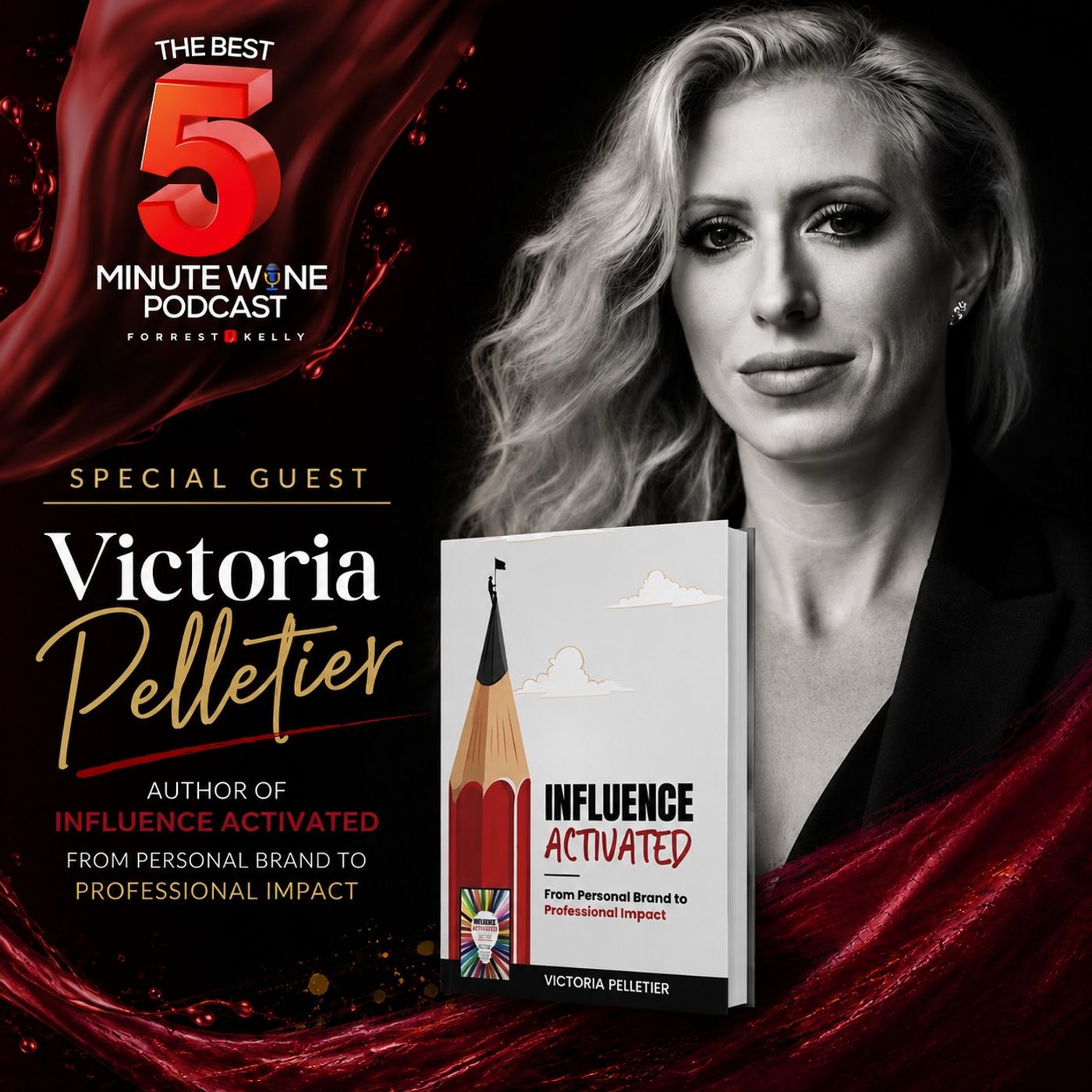
And then I've got the follow on to the personal branding book on really how do you activate it. The first was focused on how do you build a brand? The next is what do you do? How do you go out and enrolled with that? The new book is called Influence Activated. It's the part two of the one on building your brand called Influence Unleashed. Can you give us a little bit of a tease on that and how it's relevant here in 2026, how you've updated it with AI and everything that's going on now? The first book I wrote, Influence Unleashed was just talking about the importance of a personal brand and how do you build it?
Because I find many get it wrong. They only focus on the, what they do, the industry, they've done it, sort of their credentials versus talking about the broader part, like people do business with people. And so that one I wrote, and at that point, people were like, this is amazing. What's my strategy for now to how do I go in the world and that? So that's the new book, Influence Activated. Once you've developed the narrative, the storytelling, the pieces you want to show the world, how do you go forward with that and why it's so relevant?
More so during COVID, when we all sat in our homes, the digital presence, the online presence was more and more important. I never looked to meet with a new perspective, hire client, existing client without doing some research on them first. So, you know, you need to be really concerned about and develop your own narrative of people will do it for you. So it's really, really important. But with that, there's a level of authenticity. I mean, now with you said AI, but like the, you know, the beautiful filters and things like that.
I do use AI. So I don't, I talk about using it, but there needs to be a level of authenticity in terms of how do you do that? It's not perfectly all filtered all the time. So it's really, really important to be building. I think there's a lot of people in, particularly in business, they just hope that their strong performance is going to get them to the next step when really you need to do much more than that. What kind of a read is it? No, I have a low attention span myself. So I try to make it like pretty simple read.
You can get through it in one day. All the books I've narrated, well, that's right, not the first co-authored book. The others have almost all been narrated as well because I consume a majority of my content audibly. I live in Miami now. I work from home when I'm not traveling, but at the gym when I'm traveling, when I do need to drive, I'm always listening to something. So news podcasts, learning podcasts, podcasts like this one we're on here, you know, the books, whatever. I'm voracious. You talked about voracious reader I was when I was young.
Now that's just translated into like consumer of content, but predominantly doing it by headphones. And on a side note, how much of the audio book, whether you listen to it or not or stay listening to it, depends on the narrator? Depends on how much I want to learn the content. But narration is really, narration is really important to me. That said, I listen to a majority of my podcasts, depending on their rate of speech, but generally at one and a half times. Well, I just got back from Napa, by the way.
Like I just took my husband to do like a week long trip in Sonoma, Napa Valley. I'm a wine lover. And so my favorite thing to do when we go on vacation is sit on a patio, great glass of wine in hand, people watching. You touched on a point that really keyed with me is that people, it's okay to have a glass of wine. So let's walk through some of the different things. Is there a difference between your Tuesday after a brutal day glass of wine and your I just closed something huge bottle? Absolutely.
So I have my everyday like table go to wine. That is, as you said, the Tuesday wine and then really good bottles. Although, as I said, I just got back from Napa. I bought wine from 14 wineries and I think I have 10 memberships. So I think I'm probably going to have to increase the quality of the Tuesday wine because I've got some good stuff sitting in the wine fridge now. A lot of our listeners are women who probably grind all day long and still feel guilty pouring a glass or one glass or a second glass.
What would you say to those women? Oh, don't feel guilty at all. I mean, now everything's about balance. I work out six days a week, and that is so I can eat and drink and maintain my figure. But I think if you do it in moderation, it's amazing, Michael. Why withhold that pleasure from yourself if it does bring you pleasure? So when you bought all of those bottles in Napa and joined all those things, was it specifically the taste that they gave you or you went with something in mind? So I actually, it was for my husband.
It was the first time he'd ever been to Napa or Sonoma. I went 15 years ago, it's changed a lot. I chose wineries. I built the itinerary. I chose wineries that predominantly we already knew and loved some of their wine. So it was very easy to be convinced to buy wine we already drink and then tasted new things, even new varietals like Viognier. I never really had before. I even tried Chardonnays, which I don't generally like. I'm a Sauvignon Blanc, Sancier and like Bold Cabs. All wineries I knew about for the most part, There were a few new ones, stuff I love.
Some new stuff that I tried that I'm sure I'll be loving in the future as well. It's a little bit more sentimental, but Caymus has been a favorite of mine. My husband and I had it at our wedding. Our tastes have changed. We don't love it quite as much, but we did. We went there. Dariush, Cade. I know these are all like commercials. So like, you know, Stag's Leap, Sterling, Silver Oak. We did go to Opus One, but didn't buy there because I was very put off by the very stale kind of taste experience even though the wine was quite good I very much about experience Yes So you know having great experience I think about that when I go to restaurants I took my husband to do a mud bath in Calistoga, which he was not excited about.
But I was like, babe, look, we're going to have an experience and story we can tell people about. Is there a specific pairing, a wine, a food and wine dish that you I earned this moment and reward yourself with? My husband is, I'm going to say a very boring eater, boring slash allergy. So he doesn't like anything really spicy. He's allergic to MSG and he's not a big fan of like rice and pasta. He's a meat eater. And so, you know, go anywhere and you can get steak almost moving for him. And so like steak with an amazing cab.
I do love that as well. But I am way more exciting in my like food palette. I love Asian, you know, so Thai, sushi, Indian. And with that pairing with a really amazing like crisp white wine. And so depends. I travel a lot for work. So I get to eat the latter meals when I'm on my own or with colleagues. And the first one I'm with my hubby. Danny, I feel you because I'm the same way. And I've grown up, my parents instilled in me very early that I'm picking. They said, you're picky, you're picky. And it's like, well, when you go to the restaurant, you order a hamburger, you tell them what to put on it.
And I just say plain, why am I picky and you're not? I'm just discerning. Why do you have to say picky? That's right. So if you could only drink one wine for the rest of your life, would you pick your safe favorite? or go with a bottle that you've never tried but always wanted to? C, favorite. Boardroom emergency versus wine emergency. Which one stresses you out more?
Boardroom, I guess. I try not to get too stressed in any facet, but boardroom will have any more stress than wine. Pick one, a $300 bottle you have to share with the whole table or a $15 bottle that you get to drink completely alone? uh 300 with friends if you're i earned this reward dinner had a theme song that was playing when you sat down do you know what it'd be well i was like i i mentioned unstoppable a few times you know see as unstoppable i love it um but but it's not necessarily my favorite song but it's representative of me and who i am and you're certainly not going to stop me from drinking that that amazing bottle of wine Okay, last one of these, and then we'll go to the true and false, and then we'll wrap it up with your book and all that.
Would you rather have an unlimited wine budget for the rest of your life or an unlimited travel budget but only house wine, wherever you go? Travel budget. Where would you travel to? Everywhere. I love traveling, experiencing different cultures, seeing different views, watching the people there. And if I'm doing that with a house wine, that is amazing. I will take travel all day long. Okay, these are true or false. This is just some fun stuff here. I've got kind of a mixture of true and false. Victoria was the CEO of a multinational corporation by age 24.
True. True or false. Before her corporate career, Victoria trained as a sommelier in Bordeaux. False. Nope, she went straight into corporate leadership. Forget that Bordeaux stuff. True or false. Victoria's nickname among former colleagues is the Turnaround Queen. True. And are we talking runway or are we talking company? Corporate turnarounds. Corporate turnarounds for sure. Although I did walk on the runway as a teenager, but no, that's for my corporate experience. So what was the biggest turnaround that you ever had while we brought that up?
Well, I've been brought in time and time again to do turnarounds and transformations. There's, you know, two, there was one, it was in the context of a consulting environment, but I was working with a global organization who had suffered post COVID and their board mandated for them to take 30% of their workforce or operational expenses out of the business. So I helped work with a CEO on the board to engineer that. The other would be, you know, a company, when I first actually got relocated to the US, It was for a company who had gone through an ending of a joint venture with another partner, rebranded, went public, and then they acquired six companies in 18 months.
So that was pretty significant transformation in such a compressed time frame. I guess you did turn it around. True or false? Victoria gave a TEDx talk on healthy resilience. Very true. That was TEDx in Miami. And what is healthy resilience? Just a quick definition of that. Yeah, yeah, they invited me. I was their opening speaker. The theme for the night was around resilience. Healthy resilience is, you know, recognizing that there's a way to deal with the challenge and adversity, but in a way in which you process it, you know, wearing a shield of protective armor is not what I would define as healthy resilience.
So I talk about a five step process to go through to, you know, be able to work through trauma, challenge and adversity in a much better way. All right. We just heard you talking about you and Danny going to vineyards in Sonoma. Is there a wine named after you after your purchase? True or false? False. I wish. If you guys are listening, I think you should rectify that situation right now, boys. Victoria's book, The Power of Whole Human Leadership, focuses on managing modern workers toward purpose and profit.
True or false? True. all righty did we miss anything did we find out everything that we need to be successful and to drink wine unapologetically i think there's enough there your you know guests i'm sure can follow me if they want to go and see more but i think we covered it how can we follow you let's uh give me your website and places to find everything yeah one stop shop is my website which is victoria hyphen lta.com i'm sure you'll have that in the show notes so they don't need to look up the spelling.
And then if they prefer to click a link and connect with me on the other social platforms, they can do that from there. You didn't even break a sweat, did you? I did not. I love it. Thanks so much.
Oh!
 Apple Podcasts
 Spotify
 YouTube